
Blog
Practical Insights on Data, AI and Enterprise Technology
 Tech Radar
Edge or Lambda: split workloads by computing model, not by cloud brand
Tech Radar
Edge or Lambda: split workloads by computing model, not by cloud brand
 Automation
Human-in-the-loop for AI agents: designing 'sudo prompts' for automated workflows before the EU AI Act deadline
Automation
Human-in-the-loop for AI agents: designing 'sudo prompts' for automated workflows before the EU AI Act deadline



 Tech Radar
Edge or Lambda: split workloads by computing model, not by cloud brand
Tech Radar
Edge or Lambda: split workloads by computing model, not by cloud brand
 Automation
Human-in-the-loop for AI agents: designing 'sudo prompts' for automated workflows before the EU AI Act deadline
Tech Radar
Designing an internal platform for the 'N+1th developer': AI agent is the platform user
Automation
Human-in-the-loop for AI agents: designing 'sudo prompts' for automated workflows before the EU AI Act deadline
Tech Radar
Designing an internal platform for the 'N+1th developer': AI agent is the platform user
 Data & AI
Context engineering for agents: a 1M token window cannot save dirty context
Data & AI
Context engineering for agents: a 1M token window cannot save dirty context
Categories
Explore stories by topic
AI Agents
 Architecture
 Automation
 Case Studies
 Cloud & Infrastructure
 Data & AI
 Enterprise Integration
 Tech Radar

Architecture
Automation
Case Studies
Cloud & Infrastructure
Data & AI
Enterprise Integration
Tech Radar
Editor’s picks

Latest
View all →-
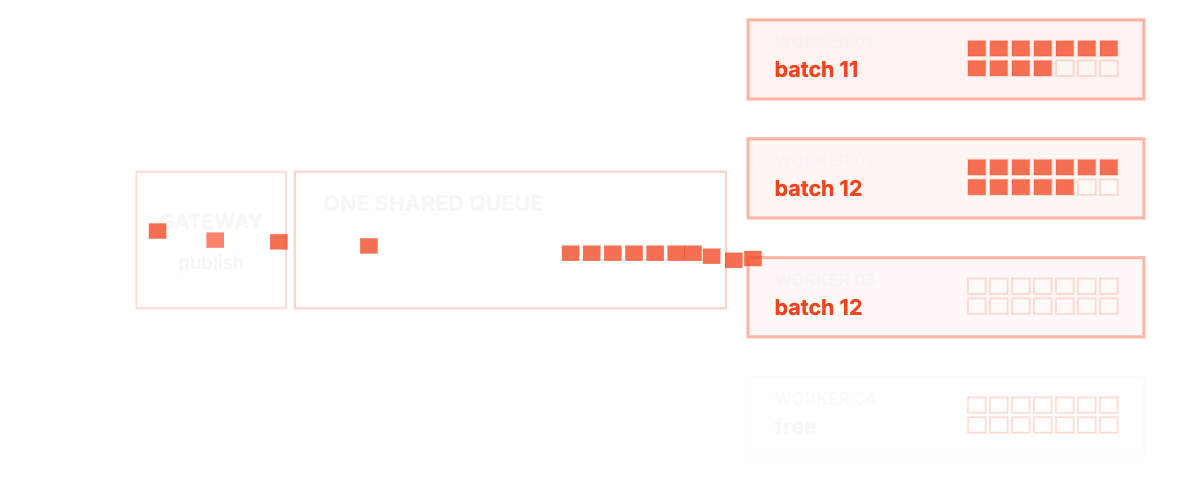 Superlinked — Compute Framework for Vector Search and AI Inference
What is Superlinked?
Superlinked is an open-source compute framework (Apache 2.0) designed to transform complex data into vector embeddings for
Superlinked — Compute Framework for Vector Search and AI Inference
What is Superlinked?
Superlinked is an open-source compute framework (Apache 2.0) designed to transform complex data into vector embeddings for
-
-
-
-
Context engineering for agents: a 1M token window cannot save dirty context Model 2026 is racing to reach 1M context, but over 70% of LLM application errors still stem from incorrect and redundant context. Managing context like managing operating system memory — that is the discipline to learn.
-
Kafka abandons hard disks: KIP-1150 Diskless Topics and the problem of cutting 80% of cloud streaming costs KIP-1150 is accepted for 3/2026: Kafka topics write directly to object storage, removing cross-AZ replication. Who should trade latency for 80% cost savings, and who should stick with classic Kafka?
-
Voicebot under 800ms: why latency, not voice quality, determines the success or failure of voice AI TTS voices have been human-like for a long time. What makes customers hang up is the 1.5-second silence after every question. Let's dissect the latency budget of a voicebot call and why the old STT→LLM→TTS pipeline cannot win.
-
Designing an MCP server for internal systems: don't just port your REST API over Auto-generating an MCP server from an OpenAPI spec is the shortest path to an agent that wastes tokens uselessly. REST serves developers, MCP serves LLMs — these two targets require different designs.
-
Spec-Driven Development with GitHub Spec Kit: specify first, generate code later Features requiring multiple man-days that are handed over to a coding agent via ad-hoc prompts will sooner or later turn into vibe coding. Spec Kit provides a 4-phase process to ensure that the spec — not the prompt — is the single source of truth.
-
Tetragon replaces Falco + auditd: consolidating runtime security into a single eBPF agent Running both Falco and auditd on the same node is redundant and costly. Evaluating the direct move to Tetragon 1.4: inline enforcement in the kernel, practical TracingPolicy, and the event data overhead that few people talk about.
-
Production-ready Webhooks 2026: Standard Webhooks, JWKS, and the replay problem The difference between a webhook that "works" and a webhook that "runs reliably" is a checklist: Standard Webhooks, rotating signing keys via JWKS, retries with DLQ, and idempotency keys on the receiver side.
-
Self-hosting LLMs with vLLM: cost analysis and a checklist before leaving APIs At stable volumes, self-hosting is 8–18x cheaper per token than APIs — but only if you calculate the break-even formula correctly and can afford the operational costs. A financial + technical problem for VN tech leads in 2026.
-
Wasm beyond the browser: when WebAssembly replaces containers for lightweight microservices WASI and the Component Model are mature, with cold starts of 1-5ms and memory usage at 1/10 of Node.js. However, server-side Wasm is only suitable for a specific layer of workloads — this article helps you decide where to pilot.
-
When the customer is an AI agent: preparing websites and catalogs for agentic commerce before 2027 AI agents are shopping on behalf of humans — and they select brands based on data quality, not banners. What technical steps must Vietnamese e-commerce businesses take to avoid becoming invisible to this wave?
-
42% returning to monolith: re-evaluating the microservices problem through a 2026 cost-centric lens 42% of organizations are merging microservices, and service mesh usage has dropped from 18% to 8%. It's not that microservices are wrong — it's that the real bill has arrived. The framework decides for a team of 10-50 engineers.
What clients say
What clients say
What clients say
about POPTECH
Feedback from technology leaders at the enterprises we have delivered for.
“Passionate”
POPTECH is a talented professional who offers great insight and recommendations, a true partner in creating success.
“Super Support”
You guys rock on the OpBa AI Banking RoBot & Engagement Platform in DBS Project. Thanks for doing a great job.
“Customer Oriented Team”
POPTECH’s Talent is smart people and very strong IT back ground. They are customer oriented and very focused in business.
Collaborate with POPTECH
Working on a future-forward project?
Bring Data and AI
into real-world operations
POPTECH partners with enterprises in architectural design, solution development, and deployment of Data, AI, automation, and enterprise integration platforms.

What we deliver